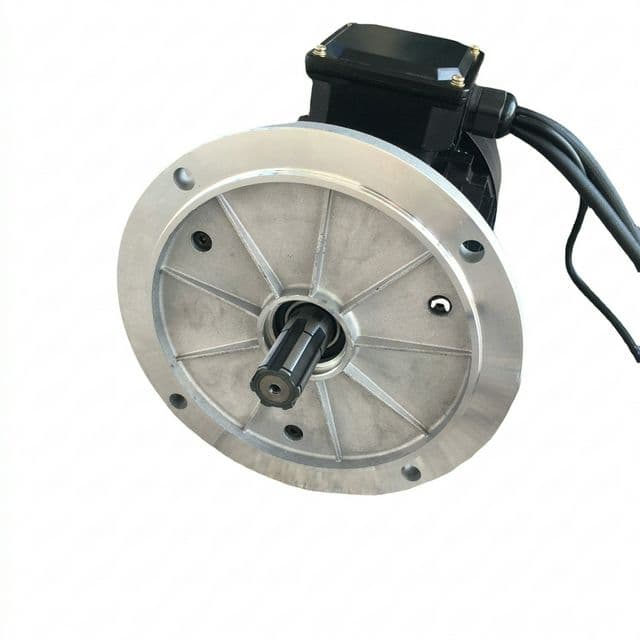
Heavy Load Forklift AGV Wheel Selector for 1.5 Ton Electric Fleets
Run a fast sizing check for wheel load, traction, and battery band. This page explicitly covers 1.5 ton electric forklift AGV intent while keeping a single canonical route at/products/heavy-duty-drive-wheels/forklift-agv.
10 public sources checked on 2026-04-25
3 scenario benchmarks with shift energy cost bands
Single canonical URL to avoid duplicate intent pages
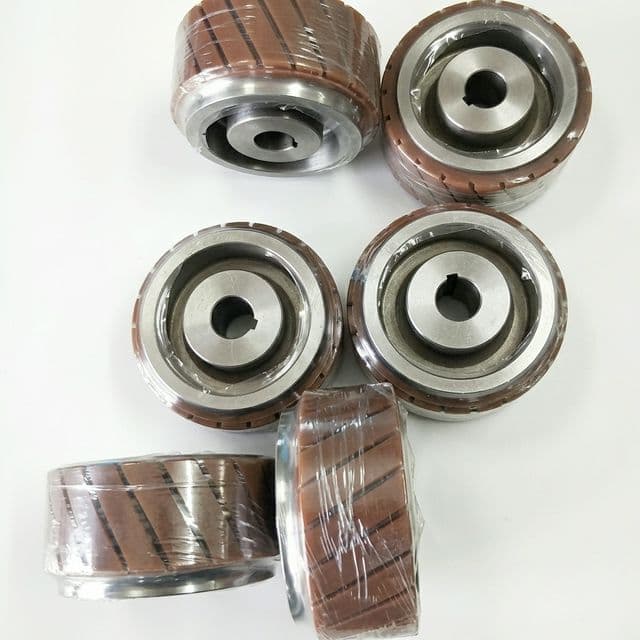
Empty state: run the calculator to get a result for your exact forklift AGV profile.
Preview baseline below uses default 1.5 ton electric forklift AGV values.
Gross moving mass
3,300 kg
Dynamic load per wheel
1,547 kg
Traction force
2,590 N
Peak drive power
5.48 kW
Estimated shift energy
56.8 kWh
US shift electricity band
$5.08-$5.27
The profile exceeds standard envelope. Use custom wheel module and run prototype validation.
Estimated battery band: >= 40 kWh
Estimated shift energy: 56.8 kWh. Budget reference: $5.08-$5.27 per shift at US industrial average electricity rates (EIA Jan-Feb 2026, preliminary).
Boundary: this cost band is not a plant tariff quote and excludes demand/TOU charges.
Stage1b Audit: Evidence Gap Closure
Audit updated April 25, 2026| Gap found | Decision impact | Stage1b update | Status |
|---|---|---|---|
| Ramp boundary (10-12%) previously had no external benchmark context. | Could over-trust calculator output for repeated ramp duty and underestimate thermal risk. | Mapped boundary to OSHA >10% grade handling rule and to manufacturer data showing lower continuous gradeability than peak figures. | Closed |
| Battery estimate lacked cost visibility for sourcing decisions. | RFQ teams could not connect kWh estimate to operating budget sensitivity. | Added EIA Jan-Feb 2026 industrial price band and inline shift-cost estimate next to battery output. | Closed |
| Lead-time comparison values had no provenance disclosure. | Readers might treat internal ranges as public market benchmark. | Marked lead-time rows as internal RFQ snapshots and added explicit public-data limitation note. | Closed |
| 900/1400 kg per-wheel cutoffs had no public standard citation. | Risk of interpreting heuristics as regulatory or universal OEM limits. | Added pending-confirmation label and required follow-up with supplier test reports and axle-load simulation. | Pending confirmation |
Report Summary: Key Conclusions
Updated April 25, 2026> 1400 kg dynamic load per wheel
Primary decision variable for wheel module selection
Includes rolling resistance + ramp component
~56.8 kWh/shift; $5.08-$5.27 per shift at US industrial average (EIA Jan-Feb 2026).
- 1.0-1.8 ton electric forklift AGV with known lane quality and stable shift planning.
- Procurement teams needing a fast wheel and motor envelope before RFQ locking.
- Integrators that need a transparent assumptions sheet for internal design review.
- Public-road operations, outdoor weather variance, or explosive-atmosphere environments.
- Projects requiring final compliance proof without full safety risk assessment workflow.
- Any scenario with unmeasured shock loads where prototype testing is mandatory.
Methodology and Evidence
1) Dynamic wheel load = static wheel load x safety factor x floor dynamic factor.
2) Traction force = gross mass x 9.81 x (rolling resistance + ramp ratio).
3) Power = traction force x speed / drivetrain efficiency.
4) Battery band = power x shift hours x duty cycle / usable ratio.
| Assumption | Value | Reason |
|---|---|---|
| Drivetrain efficiency | 0.85 | Conservative motor + gearbox estimate for RFQ stage |
| Duty cycle | 0.55 | Mixed stop-go logistics profile |
| Battery usable ratio | 0.85 | Reserve for aging and shift variance |
| Source | Use |
|---|---|
| ISO 3691-4:2023 (Edition 2) Published 2023-06, checked 2026-04-25 | Driverless industrial truck safety scope and lifecycle hazards. Public abstract available; full text is paywalled. |
| 29 CFR 1910.178 (US eCFR) Current eCFR page checked 2026-04-25 | Powered industrial truck operation baseline for US facilities. Public regulation text available. |
| OSHA Powered Industrial Trucks eTool (Physical Conditions) OSHA page checked 2026-04-25 | Operational checks for floors, docks, and ramps before truck movement. Public guidance page from OSHA. |
| ANSI/ITSDF B56.5-2024 (store summary) Edition year 2024, store page checked 2026-04-25 | US consensus standard title and revision status for driverless guided industrial vehicles. Public listing metadata available; full standard clauses are paywalled. |
| ISO 13849-1:2023 Published 2023-04, checked 2026-04-25 | Safety-related control system design principles for machine functions. Public standard page available; full text is paywalled. |
| Toyota Core Electric Spec Sheet (2024) Document title indicates 2024, checked 2026-04-25 | 1.5-ton class electric forklift examples showing short-duration vs 60-minute gradeability ratings. Official manufacturer technical PDF. |
| Hyster J45-70A Technical Guide Page checked 2026-04-25 | Gradeability and energy-consumption examples plus explicit comparability cautions. Official manufacturer technical guide page. |
| Crown B50X-7 Spec Sheet PDF checked 2026-04-25 | Counterexample data showing gradeability varies by battery and load condition. Official manufacturer spec PDF. |
| US EIA Electric Power Monthly Table 5.3 Data table checked 2026-04-25 | National industrial electricity price data used for shift-cost sensitivity band. Primary US government statistics source. |
| EN 1175:2020 catalog summary Catalog page checked 2026-04-25 | Electrical/electronic requirements context for industrial trucks. Public catalog metadata available; full clauses require purchased copy. |
| Decision question | New data point | Boundary / counterexample | Action | Sources |
|---|---|---|---|---|
| How conservative should ramp limits be for 1.5-ton electric forklift AGV use? | 29 CFR 1910.178(n)(7)(i) defines handling behavior for grades over 10%. Toyota 8FBC15U shows loaded gradeability 20% (3 min) vs 8% (60 min). | Peak gradeability does not equal sustained operation capability. Duty window must be explicit. | For repeated ramps >= 8%, request OEM 30/60-minute gradeability and thermal curves before PO. | 29 CFR 1910.178, Toyota Core Electric Spec Sheet (checked 2026-04-25) |
| Can brochure gradeability values be compared directly across vendors? | Hyster J45-70A lists max loaded gradeability 19-25% and 30-minute loaded 10-13%, and states figures are for comparison only, not slope-operation endorsement. | Vendor tables can use different assumptions (battery, tire, duty period). | Normalize vendor comparison by duration, load state, tire type, and battery SOC. | Hyster J45-70A Technical Guide (checked 2026-04-25) |
| What is a realistic first-pass energy cost range? | US EIA Table 5.3 reports industrial electricity at 9.29 c/kWh (Jan 2026), 8.95 c/kWh (Feb 2026), YTD 9.13 c/kWh (preliminary). | National average only; site tariff, demand charges, and TOU pricing can vary materially. | Use this page for budget screening, then replace with plant tariff data for final TCO. | US EIA Electric Power Monthly Table 5.3 (checked 2026-04-25) |
| Is floor-condition data optional for early sizing? | OSHA eTool highlights floor and ramp condition checks as operational prerequisites before powered industrial truck movement. | Without measured floor roughness/joint profile, shock loads stay uncertain. | Default to rough profile when floor data is unknown; downgrade confidence and trigger site measurement. | OSHA Powered Industrial Trucks eTool: Physical Conditions (checked 2026-04-25) |
| Do public standards define this page's 900/1400 kg dynamic-load bands? | No reliable open-source standard text was found for these exact cutoffs as of 2026-04-25; ISO/ANSI detailed clauses are mostly paywalled. | Current band boundaries are engineering heuristics for pre-screening only. | Status: Pending confirmation. Validate with supplier fatigue reports and vehicle-level load simulation. | ISO/ANSI public listing pages checked 2026-04-25; detailed clauses unavailable publicly |
Time marker: all sources above were reviewed on 2026-04-25. Electricity pricing reference release: EIA table published 2026-04-23 (preliminary values).
Comparison, Boundaries, and Risks
| Option | Lead Time | Capex Risk | Best Fit | Evidence status |
|---|---|---|---|---|
| Standard wheel module | 2-4 weeks | Low | Stable 1.5 ton electric forklift AGV lines | Internal RFQ snapshot (2025-2026); no reliable public benchmark |
| Reinforced retrofit | 4-7 weeks | Medium | Mixed floor + higher cycle variability | Internal RFQ snapshot (2025-2026); no reliable public benchmark |
| Custom heavy-load module | 8-14 weeks | High | Boundary or beyond-boundary operations | Internal RFQ snapshot (2025-2026); no reliable public benchmark |
Lead-time values are planning references from anonymized RFQ history, not public market statistics.
| Band | Boundary | Operational fit | Action |
|---|---|---|---|
| Standard heavy-duty wheel module | <= 900 kg dynamic load per wheel | Most 1.0-1.5 ton electric forklift AGV lanes with stable floor quality. | Request baseline wheel datasheet + lead time confirmation. |
| Reinforced wheel module | 901-1400 kg dynamic load per wheel | High-cycle or mixed-floor corridors where shock margin is needed. | Run fatigue check and bearing life validation before PO. |
| Custom heavy-load module | > 1400 kg dynamic load per wheel | Ramps, rough flooring, or payload plans beyond standard envelope. | Book engineering review and prototype validation. |
Boundary note: <= 900 kg, 901-1400 kg, and > 1400 kg are pre-screening heuristics. No reliable open public standard text with identical cutoffs was found (status: pending confirmation).
| Risk | Trigger | Mitigation |
|---|---|---|
| Misuse risk | Using output as compliance proof | Run formal risk assessment and safety validation workflow |
| Gradeability over-claim risk | Using max brochure gradeability as continuous duty limit | Compare 30/60-minute ratings and verify OEM notes before route release |
| Energy budget risk | Site tariff differs from US average electricity price | Replace EIA band with plant tariff and demand-charge model before TCO sign-off |
| Standards scope risk | Assuming ISO/ANSI summary pages provide full numeric design limits | Purchase and review full clauses; track unresolved items as pending confirmation |
| Floor-data risk | Missing floor roughness or stop frequency data | Mark uncertain fields explicitly, default to rough profile, and require site measurement |
| Scenario mismatch | Seasonal throughput spike ignored | Check peak-season scenario before locking procurement |
Scenario Examples
Dynamic load/wheel: 1,144 kg
Power demand: 2.95 kW
Suggested class: Reinforced wheel module
Shift energy: 30.6 kWh
Shift electricity band: $2.74-$2.84
Dynamic load/wheel: 1,781 kg
Power demand: 7.50 kW
Suggested class: Custom heavy-load module
Shift energy: 87.3 kWh
Shift electricity band: $7.82-$8.11
Dynamic load/wheel: 3,024 kg
Power demand: 15.84 kW
Suggested class: Custom heavy-load module
Shift energy: 205.0 kWh
Shift electricity band: $18.35-$19.05
| Scenario | Payload | Floor | Dynamic load/wheel | Band | Shift energy | Shift electricity band |
|---|---|---|---|---|---|---|
| Standard Warehouse Putaway | 1,500 kg | Smooth epoxy floor | 1,144 kg | Reinforced wheel module | 30.6 kWh | $2.74-$2.84 |
| Mixed-Floor Cross-Dock | 1,800 kg | Mixed concrete floor | 1,781 kg | Custom heavy-load module | 87.3 kWh | $7.82-$8.11 |
| Heavy Throughput Peak Season | 2,500 kg | Rough or joint-heavy floor | 3,024 kg | Custom heavy-load module | 205.0 kWh | $18.35-$19.05 |
Cost band uses US EIA industrial average prices for Jan-Feb 2026 and is not a plant-specific tariff quote.
Decision FAQ
Group 1: Sizing and envelope controls
Group 2: Procurement and cost-risk controls
Group 3: Safety and deployment controls
Total questions: 14
Action Layer: Move from estimate to RFQ
Use this one-page output to align engineering and sourcing. If your profile crosses boundary thresholds, switch to custom validation before purchase.
Related engineering articles
Use these deep-dive notes for torque sizing, RFQ completeness, and sample acceptance planning.
- AGV Forklift Costs and ROI Calculator
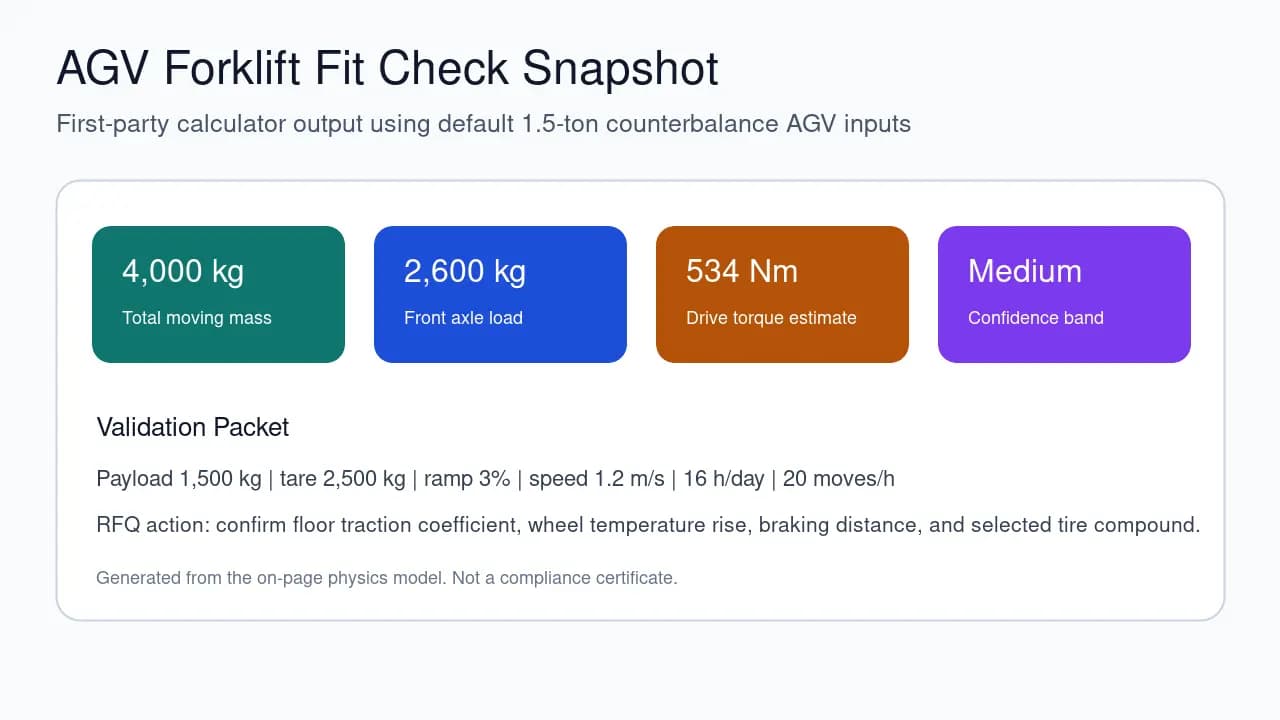
- AGV Forklift Manufacturers Selection Guide
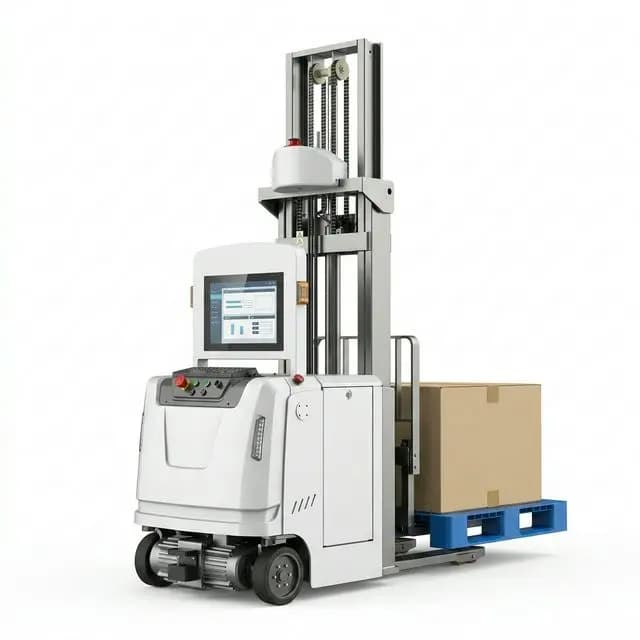
- AGV Forklifts Australia Fit Checker and Report
- 310mm Mecanum Wheel Forklift Checker and Report
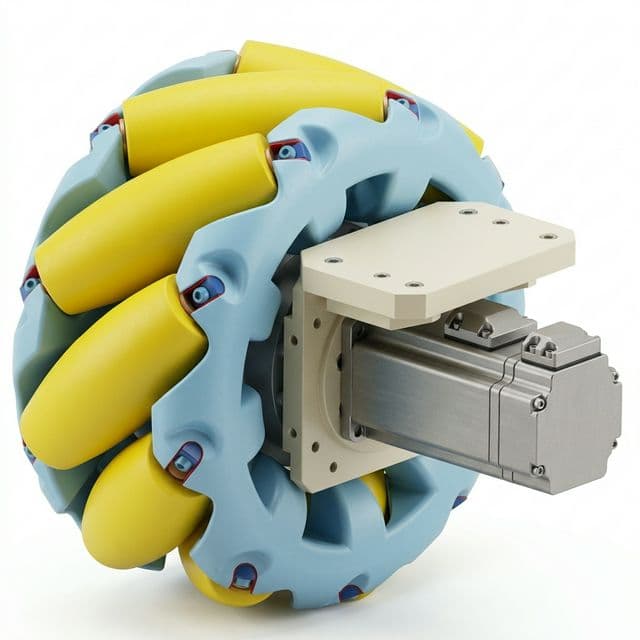
- How to Calculate AGV Drive Wheel Torque and Motor Sizing
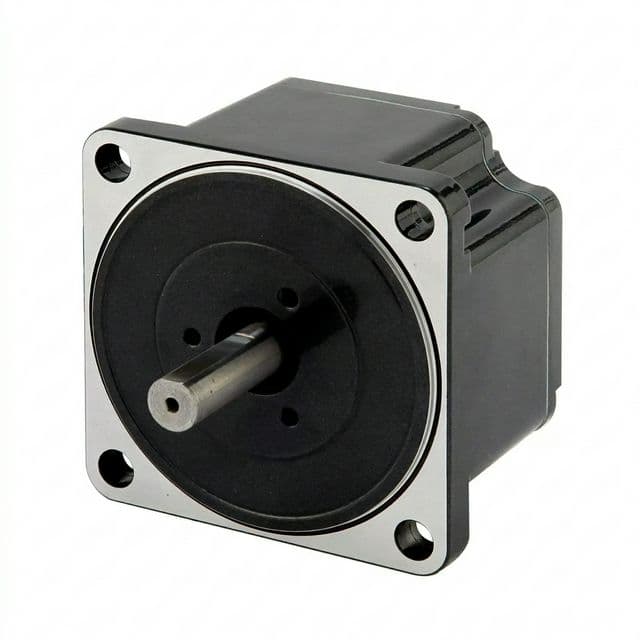
- AGV Drive Wheel RFQ Checklist for OEM Buyers
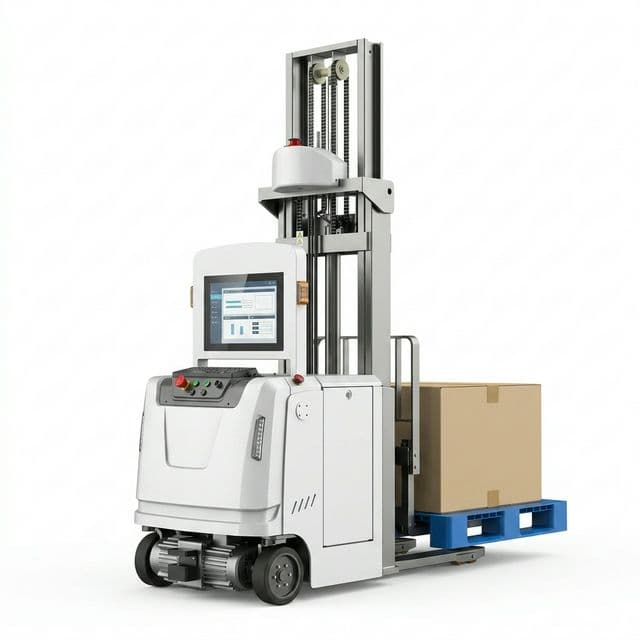
- How to Define AGV Drive Wheel Acceptance Criteria Before Sampling
- AGV Caster Wheel Load Calculator
- Commercial Service AGV Drive Wheel Checker

- Warehouse AGV Drive Wheel Traction Checker