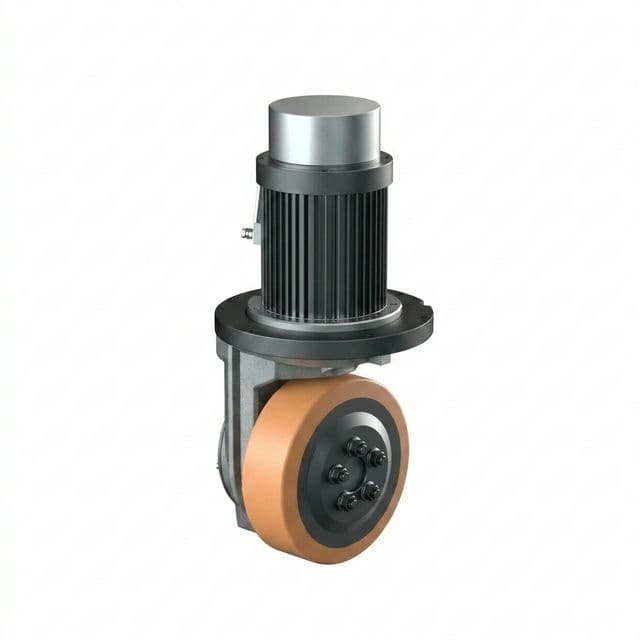
AGV Differential Drive Robot Checker
Screen an AGV differential drive profile first, then compare 2 wheel and 4 wheel robot layouts with evidence-backed boundaries, risks, and RFQ actions on one canonical page.
Searching for AGV differential drive or a dedicated 4 wheel differential drive robot boundary check? Use the layout selector in the tool first.
Canonical path: /learn/differential-drive
Published · Last updated
4-wheel mode adds scrub/transient penalties and stricter boundary warnings for tight-turn scenarios.
| Input field | Range |
|---|---|
| Total moving mass (kg) | 80 - 4500 (step 10) |
| Drive wheel diameter (mm) | 100 - 350 (step 5) |
| Track width (mm) | 320 - 1400 (step 5) |
| Target speed (m/s) | 0.2 - 2.5 (step 0.05) |
| Route grade (%) | 0 - 18 (step 0.5) |
| Duty hours per day | 4 - 24 (step 1) |
| Stop-start events per minute | 0 - 40 (step 1) |
| Safety factor | 1.05 - 1.8 (step 0.05) |
Executive summary for mixed do/know intent
Core conclusions first, then deep rationale. This section bridges tool output and procurement decision.
Conclusion 1
Differential-drive is non-holonomic (vy = 0). If your route needs lateral strafe, architectural switch is required, not controller retuning.
Source: S2,S3 (checked 2026-07-03)
Conclusion 2
Public envelopes diverge by duty class: MiR250 lists 250 kg and 2.0 m/s, while MiR1350 lists 1350 kg, 1.2 m/s, and 9 h 50 min runtime in quick facts.
Source: S5,S6 (checked 2026-07-03)
Conclusion 3
ISO 3691-4 is active but marked for revision, and VDA 5050 older versions are no longer recommended; compliance/version freeze must be explicit in RFQ.
Source: S1,S7,S8 (checked 2026-07-03)
Use this canonical page when the job is to verify whether a left/right differential drive architecture can carry an AGV mission profile before RFQ.
The tool output should drive one of three actions: proceed to RFQ, run pilot instrumentation, or redesign the drive module.
Minimum screening data: moving mass, wheel diameter, track width, speed, grade, floor condition, duty hours, stop-start rate, and safety factor.
Missing route or duty data should be treated as an RFQ risk, not hidden behind brochure torque values.
The alias keyword "agv differential drive" remains merged into /learn/differential-drive; no separate duplicate route is required.
2 wheel and 4 wheel robot checks stay as layout variants inside the same AGV differential drive workflow.
Payload envelope: 300-1800kg with predictable route grade, narrow lanes, and controlled stop-start profile.
Best for: warehouse transfer, line-side replenishment, and indoor shuttle tasks.
Payload envelope: 1200-3200kg with mixed-floor patches where stability is prioritized over peak maneuvering efficiency.
Best for: heavier tug routes and applications where load settling margin is more important than low scrub.
Note: incline limit often needs supplier-only test data in heavy-duty class (pending confirmation).
Harsh floor seams, extreme slope, and heavy-duty around-the-clock operations with minimal maintenance windows.
Use reinforced drive or alternative steering architecture evaluation.
2 wheel differential drive robot| Topic | New fact / data point | Decision impact | Source |
|---|---|---|---|
| Safety standard lifecycle | ISO 3691-4 Edition 2 was published in 2023-06, and ISO marks this edition as to be revised with ISO/DIS 3691-4 under development (checked 2026-07-03). | For multi-year programs, lock which edition your project certifies against and define when migration review is mandatory. | S1 |
| Non-applicable environments | ISO 3691-4 excludes public-road operation and severe conditions such as freezer, extreme climates, nuclear, and potentially explosive environments. | If your scenario includes explosive atmosphere, severe climate, or public-road operation, escalate to dedicated compliance workflow immediately. | S1 |
| Controller documentation branch | ros2_control Rolling docs are current rolling documentation and can change before release; production baselines should bind to a released distribution branch. | Do not freeze procurement assumptions from Rolling alone; bind software decisions to a released branch in your project baseline. | S2 |
| Controller fail-safe and geometry constraints | diff_drive_controller defaults cmd_vel_timeout to 0.5 s, supports automatic stop after timeout, and requires wheel_separation > 0 and wheel_radius > 0. | Treat timeout behavior and wheel geometry calibration as pilot acceptance criteria, not post-purchase tuning tasks. | S2 |
| Non-holonomic motion boundary | Differential-drive kinematics is non-holonomic: lateral velocity vy must be zero, and only forward velocity plus yaw rate are mapped to wheel speeds. | If your mission needs lateral translation, move to omni/mecanum architecture instead of forcing differential-drive tuning. | S2,S3 |
| 4-wheel differential concept boundary | Clearpath documentation states control type is determined by controlled wheel groups, not motor count; a one-motor-per-side platform can still be diff_4wd. | For 4 wheel differential drive robot intent, verify drivetrain control mode and wheel pairing before estimating scrub and turn performance. | S4 |
| Public product baseline contrast | MiR250 public page states 250 kg payload and 2.0 m/s speed, while MiR1350 quick facts state 1350 kg payload, 1.2 m/s max speed, and 9 h 50 min runtime. | As duty class rises, speed and runtime envelopes compress; reuse of light-duty assumptions in heavy-duty RFQs increases redesign risk. | S5,S6 |
| Interoperability standard freshness | VDA recommends VDA 5050 v3.0.0 (March 2026) and says older versions are no longer recommended; the 2026-04-20 release adds zone concept and path sharing for higher-autonomy robots. | Mixed-fleet deployments should confirm version alignment up front to avoid integration rework. | S7,S8 |
| Concept | In scope | Out of scope | Source |
|---|---|---|---|
| Differential-drive body model | Linear x + angular z motion commands, with odometry and wheel-speed mapping around these axes. | Sideways translation (vy) without heading change; this is not supported by differential-drive kinematics. | S2,S3 |
| 4 wheel differential drive robot | Left-right grouped drive control where front and rear wheels are differentially driven as a 4WD set. | Assuming 4-wheel means omnidirectional behavior or independent steering per wheel. | S4 |
| Screening result applicability | Industrial indoor pre-screening for torque margin, duty load, and boundary risks before RFQ/pilot. | Legal compliance closure and final safety release under excluded environments. | S1,S2 |
| Condition | Boundary | If ignored | Source |
|---|---|---|---|
| Public road or non-industrial route | Outside ISO 3691-4 intended scope for driverless industrial trucks. | Screening result can appear valid but still fail legal and system safety requirements. | S1 |
| Standard revision not tracked in project plan | ISO 3691-4:2023 is flagged as to-be-revised with a successor draft in progress. | Design decisions can pass screening but fail later compliance change reviews. | S1 |
| Rolling documentation used as frozen production spec | Rolling branch is development documentation and can change before release. | Controller behavior assumptions can drift between pilot and deployment branches. | S2 |
| Stale command and open-loop behavior not validated | cmd_vel_timeout defaults to 0.5 s and open_loop can switch odometry source from feedback to commanded values. | Unexpected stop/drift behavior can appear under network jitter or encoder issues. | S2 |
| Mission expects lateral strafe from differential drive | Differential-drive model is non-holonomic and ignores lateral velocity components. | Route plans can be physically unrealizable even when torque calculations look safe. | S2,S3 |
| Wheel-controller mismatch in 4-wheel layouts | Clearpath notes omni_4wd requires mecanum wheels and controlled wheels cannot be caster wheels. | Vehicle can pass spreadsheet checks but fail controllability and path-tracking in commissioning. | S4 |
| Dirty or wet floor assumptions | Public product pages do not replace route-specific floor qualification; MiR1350 is positioned with IP52 dust/waterdrop resistance, while traction still depends on the actual floor state. | Traction and braking margins can collapse while static torque utilization still appears acceptable. | S5,S6 |
| Platform | Payload | Max speed | Grade / mobility limit | Environment limit | Implication | Source |
|---|---|---|---|---|---|---|
| MiR250 | 250 kg | 2.0 m/s | Public product page does not expose route-grade acceptance limits | Public page positions it for demanding indoor AMR use | Useful light-duty reference, but route-grade and traction limits still need supplier confirmation. | S5 |
| MiR1350 | 1350 kg | 1.2 m/s | No incline figure listed in public page quick facts | IP52 positioned for dust particles and waterdrops | Public heavy-duty data shows lower max speed and 9 h 50 min runtime; slope capability needs supplier confirmation. | S6 |
| Clearpath A200/A300 controller examples | N/A (controller-level guidance) | N/A | Control type depends on controlled wheels; omni_4wd requires mecanum pairing | Configuration validity depends on wheel-control pairing | Controller-wheel mismatch is a frequent failure mode in early 4-wheel differential concept selection. | S4 |
| Assumption | Value / formula | Reason |
|---|---|---|
| Traction force model | F_total = (F_roll + F_grade) × shock × transient × safety | Separates physics baseline from duty amplification to avoid hidden multipliers. |
| Wheel torque split | T_wheel = F_total × radius × scrub_factor / driven_wheels | Driven wheel count and scrub behavior are both layout-dependent (2-wheel vs 4-wheel skid-biased). |
| Reference torque envelope | T_ref(Nm) = 0.42 × wheel diameter(mm) × layout_envelope_factor | Internal pre-screen heuristic only; not a substitute for supplier test report. |
| Thermal duty index | duty_hours × transient × shock × (power_kw / 3.5) | Flags high cycle stress before full thermal simulation is available. |
| Turning envelope check | omega_max = 2v / track_width | Highlights aggressiveness of in-place steering requests. |
| Source | Scope | Date | Status |
|---|---|---|---|
| [S1] ISO 3691-4:2023 safety scope for driverless industrial trucks | Applicability and exclusion boundaries for AGV/AMR deployment decisions | published 2023-06, checked 2026-07-03 | Known |
| [S2] ROS2 diff_drive_controller documentation (Rolling) | Command timeout behavior, geometry constraints, open_loop behavior, and branch maturity caveat | rolling docs (Jul 2026 documentation), checked 2026-07-03 | Known |
| [S3] WPILib differential-drive kinematics reference | Non-holonomic boundary and track-width-dependent wheel-speed mapping | stable docs, checked 2026-07-03 | Known |
| [S4] Clearpath drivetrain configuration guidance | 4-wheel differential control-type boundary and valid wheel/controller pairings | updated 2025-08-22, checked 2026-07-03 | Known |
| [S5][S6] MiR250 and MiR1350 public specification pages | Observed payload/speed/runtime/floor-condition envelope contrast by duty class | checked 2026-07-03 | Partially known |
| [S7][S8] VDA 5050 version update and mixed-fleet deployment signal | Interface version freshness and interoperability risk for multi-vendor fleets | version 3.0.0 and 2026-04-20 release, checked 2026-07-03 | Partially known |
| Vehicle-level thermal/regen mission logs (customer specific) | Shift-level heat accumulation and sustained torque confirmation | no reliable public dataset as of 2026-07-03 | Unknown |
- [S1] ISO 3691-4:2023 safety scope for driverless industrial trucks: Used as scope boundary; not used as direct torque equation source.
- [S2] ROS2 diff_drive_controller documentation (Rolling): Do not treat Rolling as frozen release baseline; lock released branch before procurement freeze.
- [S3] WPILib differential-drive kinematics reference: Useful for concept boundary checks: differential drive cannot deliver lateral strafe.
- [S4] Clearpath drivetrain configuration guidance: Control type depends on controlled wheels, not motor count; validates 4WD intent mapping constraints.
- [S5][S6] MiR250 and MiR1350 public specification pages: Directional benchmarks are available, but not all heavy-duty slope limits are publicly disclosed.
- [S7][S8] VDA 5050 version update and mixed-fleet deployment signal: Version direction is public, but project-level compatibility matrix still needs integrator confirmation.
- Vehicle-level thermal/regen mission logs (customer specific): Mark as pending evidence; do not finalize release without pilot instrumentation.
| Architecture | Control complexity | CAPEX | Floor tolerance | Best fit | Main risk | Source |
|---|---|---|---|---|---|---|
| 2-wheel differential drive robot | Low to medium | $$ | Medium | Indoor transfer routes with predictable path width | Slip bias under uneven friction can grow heading error | S3,S5 |
| 4-wheel skid differential | Medium | $$$ | High load, medium precision | Heavy payload with limited precision requirement | Tire wear and floor marking increase in tight turns | S4,S6 |
| Steering axle + drive axle | High | $$$$ | High | Long straight runs and higher travel speed | Packaging and maintenance complexity rises | Pending |
| Mecanum/omni layout | High | $$$$ | Low to medium | High maneuverability in constrained cells | Efficiency and debris sensitivity penalties | S4 |
| Risk | Trigger | Impact |
|---|---|---|
| Traction collapse during dusty shift | High stop-start frequency + rough floor | High |
| Torque saturation and motor overheating | Torque utilization > 95% with long duty hours | High |
| Path-tracking drift in asymmetric payload | CG offset and mismatched wheel wear | Medium |
| Procurement mismatch from nominal-only comparison | Vendor selection based on diameter only | Medium |
- Mitigation: Reduce command acceleration, increase wheel diameter band, add traction monitoring.
- Mitigation: Switch gear ratio or larger wheel module, verify continuous torque at temperature.
- Mitigation: Add periodic calibration and independent wheel-current diagnostics.
- Mitigation: Demand duty-specific load curve, bearing life data, and thermal report in RFQ.
Scenario cases with assumptions and outcomes
Scenario outcomes are generated with the same tool model so decisions remain consistent.
Torque utilization 33.6% · Thermal index 3.1
Move to RFQ with route map, wheel-center load sheet, and requested torque duty cycle.
Torque utilization 57.0% · Thermal index 9.7
Move to RFQ with route map, wheel-center load sheet, and requested torque duty cycle.
Torque utilization 124.7% · Thermal index 27.8
Switch to reinforced module or architecture alternative, then rerun selection with revised assumptions.
Torque utilization 148.3% · Thermal index 34.1
Switch to reinforced module or architecture alternative, then rerun selection with revised assumptions.
FAQ by decision intent
Questions are grouped by route scope, reliability, and procurement actions.
| Tag | Source | Publisher | Version / date | Checked |
|---|---|---|---|---|
| S1 | ISO 3691-4:2023 Industrial trucks - Safety requirements and verification - Part 4 | ISO | Published 2023-06 | Checked 2026-07-03 |
| S2 | ROS2 diff_drive_controller user documentation (Rolling) | ros2_control | Rolling docs (Jul 2026 documentation) | Checked 2026-07-03 |
| S3 | WPILib Differential Drive Kinematics | FIRST/WPILib | Stable docs | Checked 2026-07-03 |
| S4 | Clearpath ROS drivetrain configuration (diff_4wd/omni_4wd) | Clearpath Robotics | ROS 2 Jazzy docs (updated 2025-08-22) | Checked 2026-07-03 |
| S5 | MiR250 specifications | Mobile Industrial Robots | Product page (2026 site edition) | Checked 2026-07-03 |
| S6 | MiR1350 specifications | Mobile Industrial Robots | Product page quick facts (2026 site edition) | Checked 2026-07-03 |
| S7 | VDA 5050 interface overview and version status | VDA | Version 3.0.0 published March 2026 | Checked 2026-07-03 |
| S8 | Version 3.0 of VDA 5050 released | VDA | Published 2026-04-20 | Checked 2026-07-03 |
| Data still needed | Status | Impact | Minimum action |
|---|---|---|---|
| Vehicle-level thermal rise and regeneration profile by duty cycle | No reliable public dataset | Public specs do not provide your route-specific heat accumulation risk. | Run a 2-4 week instrumented pilot and require temperature/current logs before release. |
| Supplier continuous torque curve at operating temperature | Pending confirmation | Brochure peak torque does not show sustained torque capability for long shifts. | Require torque-vs-speed-vs-temperature curve in RFQ acceptance package. |
| Mixed-fleet VDA 5050 version matrix across vendors | Pending confirmation | Version mismatch can delay interoperability, even when mechanical selection is correct. | Freeze interface version and certification evidence before software integration starts. |
| 4-wheel differential slope capability at full payload | Pending confirmation | Public heavy-duty spec pages do not always publish incline limits, so route-feasibility risk remains unknown. | Request incline-speed curve and loaded-start test report directly from shortlisted suppliers. |
Final action path
If your output is fit, proceed to RFQ. If borderline or out-of-envelope, move to pilot or custom engineering without route split.
Related engineering resources
Continue with steering architecture analysis, heavy-duty envelope checks, and RFQ preparation.
- 4 wheel omni drive canonical checker
- 3 wheel holonomic drive checker
- 24v brushless agv motor quick checker
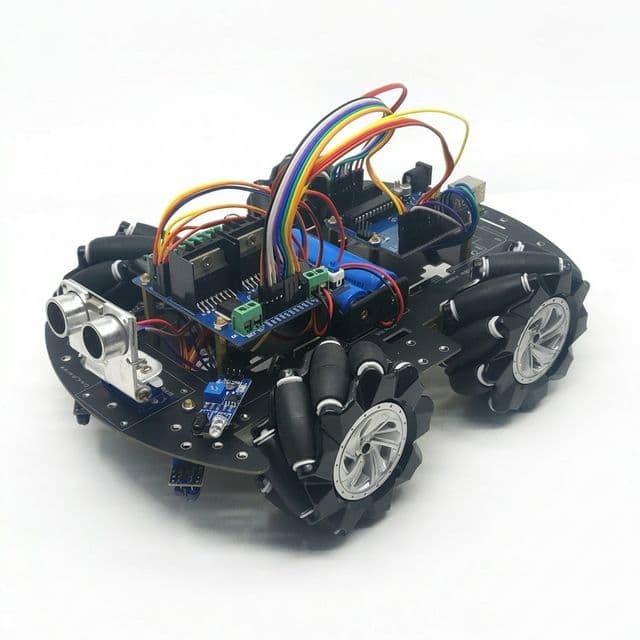
- 4 wheel differential drive robot quick checker
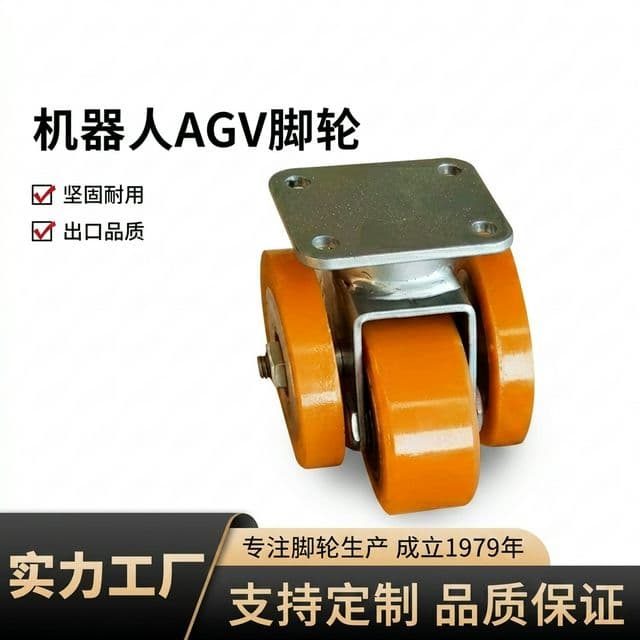
- Differential steering architecture comparison
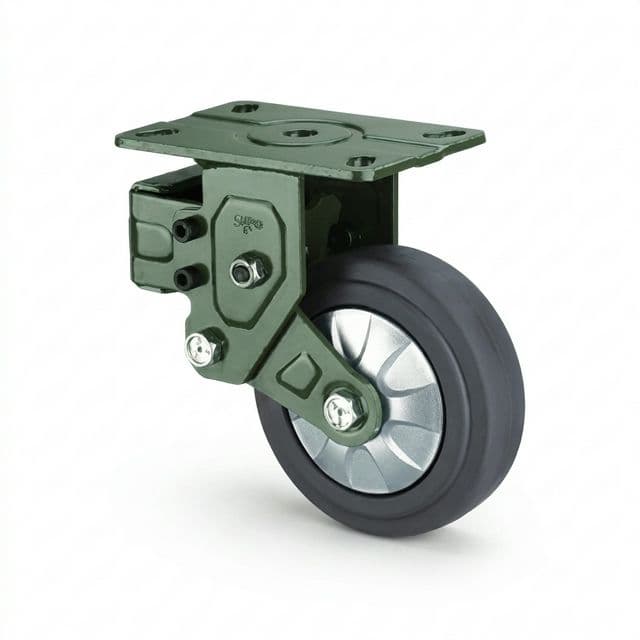
- AGV and AMR Adoption in Factories
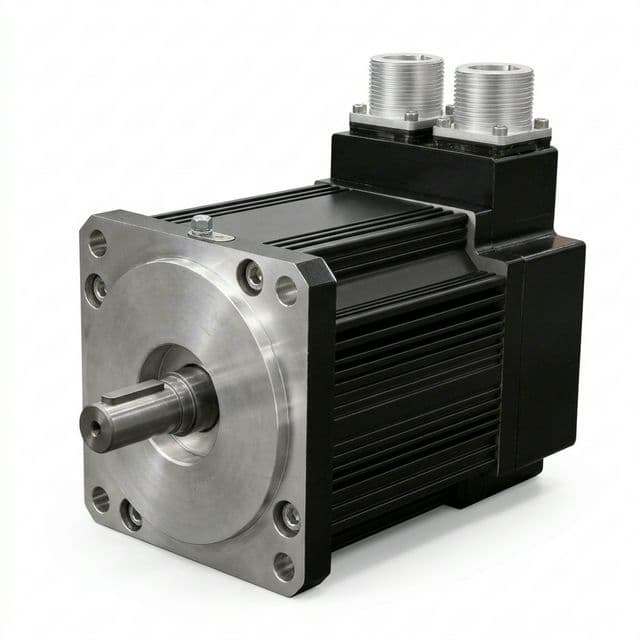
- Heavy-duty forklift AGV fit checker
- Mecanum vs omni trade-off baseline
- AGV drive wheel preload improve traction
- Submit custom differential drive RFQ